1. WEEDING & FERTILIZER APPLICATION
Farmers were encouraged to:
- Undertake timely weeding during the sunny season using the recommended cheel hoe.
- Weed 2–3 weeks before fertilizer application.
Apply NPK fertilizer at the recommended rate of 50 kg per 700 tea bushes during the short rains when the soil is moist.
Avoid both over-application and under-application.
- Use appropriate PPE during farm activities.

2. TEA PRUNING
Emphasis was placed on pruning during July and August, when the cool and dry conditions are favourable and tea bushes have adequate carbohydrate reserves for faster recovery.
- Farmers were reminded to:
- Use the recommended pruning knife and avoid unauthorized use of pangas.
- Prune one-third of their farms every 3–4 years.
- Follow the recommended progressive pruning heights. Wear appropriate PPE during pruning.
- Leave prunings in the field to act as mulch, helping conserve soil moisture, reduce erosion, improve soil structure, recycle nutrients and suppress weeds.
Correct timing, pruning cycle, height and equipment are essential in reducing dieback, gaps and pruning-related diseases such as Hypoxylon wood rot.
3. TEA PLUCKING & POST-HARVEST HANDLING
Farmers were encouraged to:
- Pluck at intervals of 7–10 days.
- Maintain the recommended standard of two leaves and a bud.
- Use appropriate plucking equipment and well-aerated baskets.
- Handle green leaf carefully to prevent premature fermentation.
- Keep harvested tea in a clean, cool, hygienic and shaded environment before delivery to the factory.
- Minimize secondary grades, which attract lower prices at auction.
- Farmers were also shown the different products and grades resulting from proper plucking, including primary grades, secondary grades and specialty teas.

4. TEA MOSQUITO BUG (HELOPELTIS) MANAGEMENT
Farmers were advised to manage the pest through:
• Continuous hard plucking.
• Good farm hygiene.
• Proper fertilizer application.
• Considering Helopeltis-resistant cultivars where available.
They were reminded NEVER to apply agrochemicals on tea farms to control the Tea Mosquito Bug, and instead maintain good agricultural practices and timely plucking.
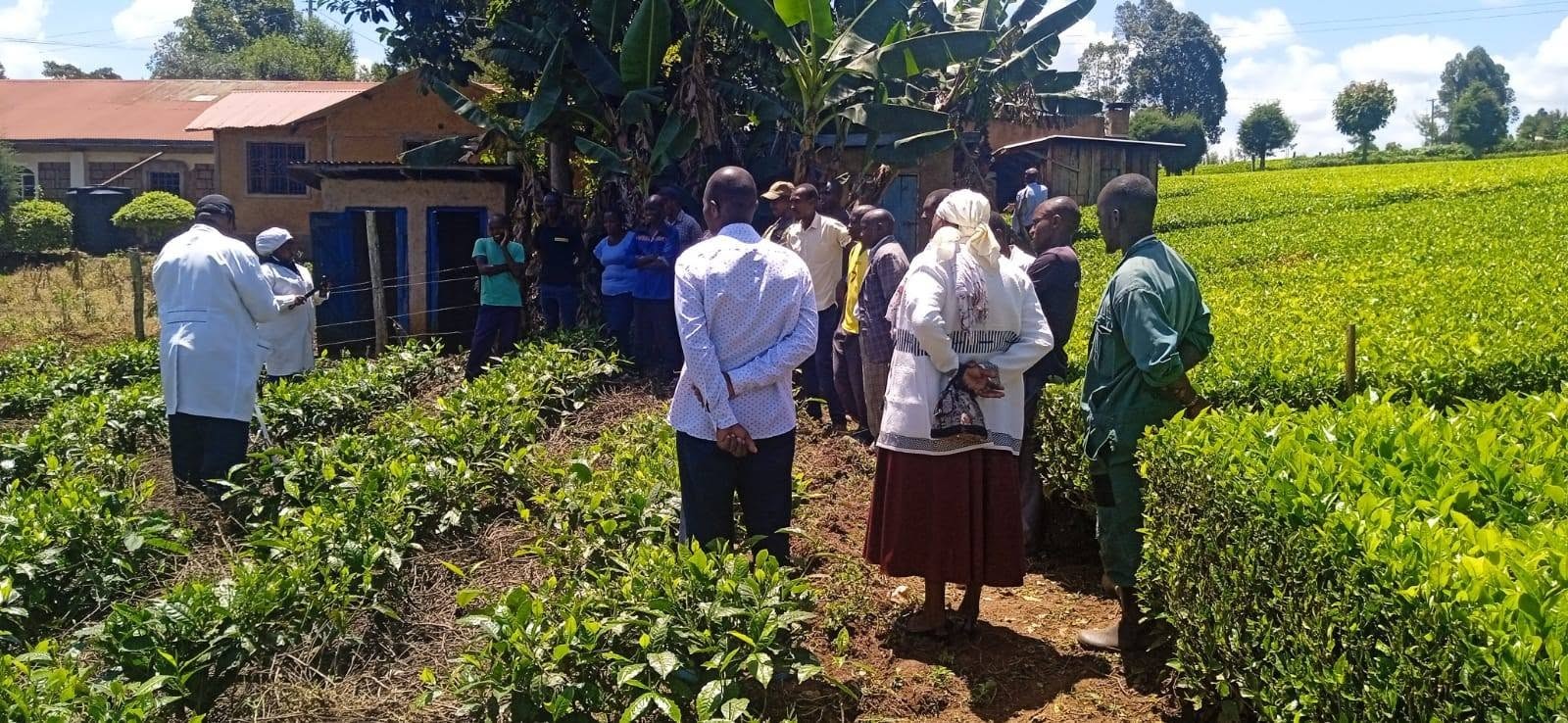
The farmers actively participated in the engagement and expressed their commitment to putting the lessons into practice while looking forward to improved tea quality and better returns.
Kapkoros Tea Factory PLC appreciates our farmers and tea pluckers for their continued commitment to producing high-quality green leaf.
GOOD QUALITY TEA. BETTER RETURNS. A STRONGER KAPKOROS.
Spread the word from Kapkoros
Share this milestone with partners, tea buyers, and the farming community.